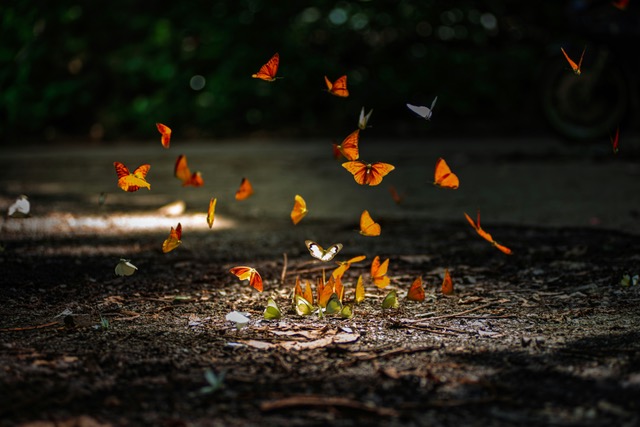
Photo by hidefumi ohmichi on Unsplash
Prefer to listen?
You can listen to this article instead. Simply press play below.
A personal and therapeutic reflection on home, identity and belonging for Third-Culture Kids and adults who grew up across cultures.
There can be a particular kind of longing when you’ve grown up across cultures. It isn’t always loneliness, not exactly. You can have people who love you, friends, a partner, a life you have deliberately built. You may even live somewhere you genuinely consider home (enough). And still, underneath all of that, you’re wondering: But where do I really belong? Because this doesn’t entirely feel like it.
For some Third-Culture Kids (TCKs), people who spent a significant part of their developmental years growing up in cultures different from their parents’ home culture, that question can follow us for years.
We may imagine there must be a place somewhere that will finally answer it: the country we were born in, the country our parents came from, the place where we spent our childhood, the place we live now, or perhaps a community of people whose experiences are similar enough that we no longer have to edit or explain ourselves quite so much.
There is something deeply appealing about imagining a place where the pieces finally line up. Somewhere we’re no longer too foreign for one group and not quite foreign enough for another. Somewhere nobody asks where we’re from, why our accent seems to shift randomly, whether our name is “real” because it doesn’t fit our face, or why we don’t know something we apparently ought to know about “our own culture”.
A place where we can simply arrive and think, Ahh… here I am. This is where I belong.
I understand that longing. But I’m increasingly interested in what happens when belonging stops being something we have to solve.
The fantasy of one complete home
It can be comforting to have one uncomplicated answer to the question, “Where are you from?”
For people whose lives have crossed countries, languages, families or cultures, the truthful answer is often much longer than the question allows. So we learn to shorten it. We might say where we live now, where we were born, where our parents are from, or whichever part of the story feels most relevant in that particular room.
None of those answers is necessarily wrong. They’re simply incomplete.
And perhaps that’s part of the difficulty. We can end up trying to fit an expansive life into much neater categories: home, country, nationality, culture, native language. Even when nobody else is demanding a simple answer, we may start demanding one from ourselves.
Which culture am I most? Where am I supposed to feel at home? Who are my people? Why can somewhere feel so familiar and strangely foreign at the same time?
The question of belonging can gradually become a question about us: whether we’re doing something wrong, or whether something is wrong with us.
When going “home” doesn’t solve it
Returning to a country that formed you can be unexpectedly disorientating. You might have spent years missing the food, language, humour, places, people or rhythm of everyday life, perhaps carrying an image of returning and finally feeling settled again.
Then you arrive and discover that you have changed. The place has changed, and the people have changed too.
There may be things a part of you recognises immediately while other parts of you feel like an outsider. You understand many of the cultural references, but not all of them. You know some of the rules, although they may no longer feel entirely yours. People may assume you understand things that you don’t, or treat you as foreign in a place you thought you were returning to.
Sometimes that hurts precisely because the place matters. These are our roots, our history, our people. Surely that is where belonging is supposed to come most naturally?
We tend to think alienation belongs in unfamiliar places, but it can be much harder to make sense of feeling alienated somewhere that once shaped you. And when “home” doesn’t solve it, another hope can take its place… perhaps I just haven’t found the right place yet. The right city, community, group of people or version of home.
Some people do find somewhere that fits beautifully, and I don’t want to dismiss that possibility. But I also wonder whether searching for one final place where every part of us fits can become its own kind of trap.
What happens to our life while we are waiting to arrive?
Belonging doesn’t have to be all or nothing
I think we can honour the longing for belonging without making our whole life dependent on finding one final place where every part of us fits.
That feels more spacious to me because it allows two truths to sit alongside each other. You may still grieve not having one simple place to call your real home, while also building a meaningful life through chosen relationships, cultural fragments, moments of connection, self-belonging and pockets of being understood and seen.
One doesn’t cancel out the other.
Grief around belonging is easily minimised. People may tell us how lucky we were to grow up internationally, how interesting it must be to have several cultures, or that home is simply wherever we decide it is. There may be truth in some of that, but gratitude and loss can coexist.
A life across cultures can give us extraordinary experiences while also leaving us without some of the continuity other people take for granted. You can value the life you have had and still wish you knew what it felt like to have roots that were never disrupted. You can love several places and sometimes wish there were just one. You can feel at home in the life you have built and still feel a pang when someone talks about friends they have known since childhood, a family home that has always been there to return to, or a community where everybody seems to understand the same unspoken rules.
Belonging becomes gentler when we stop requiring ourselves to turn all of these contradictions into one clean story.
Perhaps one reason belonging can feel so elusive is that we look for it mainly in its largest forms: a city, a culture, a permanent community, a lifelong identity.
But belonging can happen on a much smaller scale too. A conversation where you feel understood. Parallel play that feels companionable. A shared meal that warms your soul. Giving and receiving care in a way that feels nurturing and reciprocal. A friendship where you don’t have to over-explain. A moment where you feel safe enough to soften.
These experiences can seem insignificant beside the enormous question, Where do I belong? But perhaps they are also belonging, not the permanent, all-encompassing version we imagined, but something real nevertheless.
I think it can be less about being able to say “this is where I belong” and more about noticing what happens inside us when connection is there.
Learning to notice belonging
I think sometimes belonging is present, but we don’t quite let ourselves have it.
When you have spent years expecting to be the person who is slightly outside the group, it can become familiar to notice the evidence that you don’t quite fit: the cultural reference you missed, the childhood story you can’t relate to, the assumption someone makes about you, or the ease with which everyone else seems to understand what is being talked about.
For me, there is another layer to this too. As a late-realised ADHDer and an Asian TCK with experiences of childhood trauma, sometimes the basic reference points of my life simply don’t match the stories being shared around me.
Friends might talk about childhood, school, parents, siblings, family traditions or places they have known all their lives. I can listen, understand and be interested, but I can’t always reach into my own history and pull out an equivalent story. And sometimes I do have something I could share, but there doesn’t seem to be a natural place for it in the conversation.
Maybe it needs cultural context before it makes sense. Maybe what sounds like a funny or ordinary childhood story to somebody else takes me somewhere very different. Maybe telling my version would suddenly make a light conversation much heavier. Or there is simply that quick internal thought: That’s not really relevant here. That sounds too much.
So I let the moment pass.
(Yes, I’m a therapist, and I’m also a human who’s learning about life in my mid-forties. I don’t have it all figured out, and that’s okay.)
When that happens often enough, people can genuinely know us while still knowing the more accessible parts of us first. That doesn’t mean we are presenting a false self, or that those relationships aren’t real. Some parts of our story simply need more context, trust or vulnerability before they come into the room.
I think the question isn’t only “Do these people share my experiences?” but “Is there enough curiosity and emotional room here for experiences that are different from theirs?”
I’m learning that belonging doesn’t always require shared biography. But it does need enough room for our differences to exist.
And sometimes a lack of belonging is telling us something real about the environment. Perhaps we are being stereotyped, racialised, repeatedly misunderstood, expected to assimilate, or accepted only when certain parts of us stay quiet. That isn’t a failure to “notice” belonging, and it isn’t something we need to positively think our way out of.
But there are also places where difference and connection can coexist. A person doesn’t need to share your childhood or cultural history to understand something important about you. One friendship might hold your humour and cultural shorthand, another the experience of growing up between places, while someone else understands your neurodivergence, your family history or another part of your life.
The same can be true of languages and places. One language may hold a particular part of your history, another may give you access to thoughts and feelings that are harder to express elsewhere. One place might connect you to ancestry, another to childhood, another to the adult life you chose.
They don’t all need to compete to be the one place, person or relationship that contains everything.
Belonging to your own story
There is also a form of belonging that doesn’t replace our need for other people, but can change how we experience ourselves amongst them: belonging to our own story.
For some TCKs, identity can involve years of editing ourselves into something easier to explain, easier to like or love. We emphasise one part and minimise another. We anticipate questions. We work out which version of our background or experience is likely to cause the least confusion.
Adaptation can be useful, creative and very human. But over time it can leave us wondering which version is actually ours.
Self-belonging isn’t about finally creating one fixed identity and deciding exactly who we are. It is making room for the contradictions without needing one of them to cancel out another.
I can be shaped by here and there. I can love a culture and struggle with parts of it. I can call somewhere home and still sometimes feel foreign there. I can change without betraying my family, heritage, or who I used to be.
I don’t have to erase one part of myself to make another part legitimate.
And self-belonging isn’t the same as convincing ourselves that “I belong everywhere.” Sometimes we don’t. Some places genuinely aren’t a good fit for us. Some communities won’t have enough room for the person we have become.
A place can be a poor fit without that becoming a judgement about who we are.
Maybe belonging can grow
I used to think about belonging mostly as something you either had or didn’t. Now I think it may also be something we become more able to recognise, receive, and sometimes help create.
That doesn’t mean the longing disappears. There may always be elements that awaken something difficult to put into words. There may still be moments when we wish we had one uncomplicated answer about who we are and where we are from.
That longing may simply be part of loving more than one world. But our lives don’t have to remain suspended until we discover the place that finally resolves everything.
Belonging can grow slowly through friendships, chosen family, culture, shared experiences, familiar places and reciprocal care. And I think we also have a part to play in one another’s sense of belonging.
Sometimes somebody has to make the first move.
It might be sharing a little more of yourself and discovering that it gives someone else room to share too. Telling the first story. Asking the slightly more personal question. Offering help. Inviting someone along. Saying, “I find this hard too.” Letting somebody know you were thinking of them. Receiving their care rather than automatically saying you’re fine.
That can take courage. Giving and receiving, sharing and being heard, knowing and allowing ourselves to be known – these things don’t always happen easily, especially if we have spent years adapting, protecting ourselves or wondering whether our story has a place.
Going first doesn’t mean sharing everything or being vulnerable with everyone. There still needs to be enough safety and care on both sides for something to grow.
But when there is, a small risk can create an opening. We offer something real and see what happens. Does the other person meet us there? Do they offer something back? Does the relationship make a little more room?
Maybe belonging is less like finding a finished home and more like growing something together. One person plants a seed. Someone else waters it, and you take turn watering it. There is attention, repetition, care, repair, and time. Not every seed grows, and we don’t have to keep tending soil that gives nothing back.
But sometimes those small exchanges become something much bigger:
I can contribute here. I can receive here. I can be known here. I have a place in this relationship too.
And perhaps, alongside all of that, we become more at home with our own complicated, colourful story. Not because we have finally resolved every contradiction, but because we no longer need to.
If some of this feels familiar and you’d like a space to explore your own relationship with belonging, identity or growing up across cultures, I’m Star, an Asian Third-Culture Kid and neuro-affirming therapist (MBACP) working with adults in the UK and overseas.
You’re welcome to get in touch for a free 20-minute introductory call to see whether working together might feel like a good fit.
Read other blog posts:

When You’re Always Adapting: A Look at Code-Switching
Have you ever caught yourself speaking one way with family, and a
completely different way at work or with friends? Maybe your tone shifts,
your accent changes, or certain aspects of your personality step forward
while others stay hidden. This quiet shapeshifting is known as code-
switching.

People-Pleasing & Hyper-Independence: Two Sides of the Same Coin
Swinging between people-pleasing and shutting people out? At a glance, they may seem like opposites, but at the core, they have more in common than they appear. Let’s take a look.