About me
Let Me Introduce Myself
I hope this section helps you get to know me a little more and gives you an idea of who will be on this journey with you.
Multicultural roots & personal background
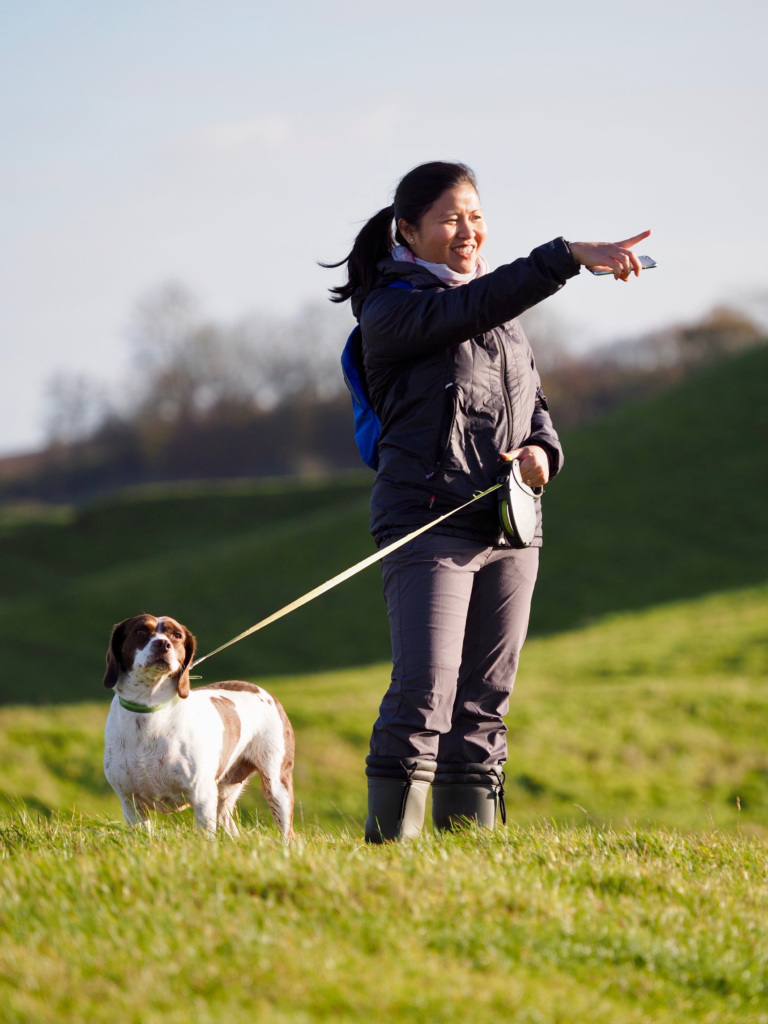
I’m Thai/Chinese. I partly grew up in Bangkok, Thailand, between my Thai and Chinese households, and partly in the UK between Thai and British cultures. I moved to the UK in 1995, when I was 14. Since then, I have tried living in Thailand twice as an adult, once with my husband and once with our dog Bella coming along. Honestly, it felt exhilarating, nostalgic, and tough all at once.
I never fully understood the meaning of Third-Culture Kid until I was 40. Discovering the TCK identity encouraged me to see identity and home differently. I did not need to choose one or fit neatly into a box. My in-between experience is valid and colourful. Today, I call the UK my “home”, where I’m building a life. Bangkok is my “roots”, and Chiang Mai is my “second home”. I have Thai, Chinese, and English names, and I am known by all of them depending on the context. I speak English and Thai (and three Chinese words), although I feel more at home in English.
Living between cultures has shaped me in ways I did not fully understand until adulthood. Like many multicultural adults and Third-Culture Kids (TCKs), I adapted to fit in and belong. I felt I did a “good job”, but beneath the surface, emotional loneliness was always with me. For a long time, my anxiety was masked by people-pleasing and being strong.
These experiences now give me a nuanced perspective and deep compassion for others navigating the in-between. I know what it is like to carry cultures, roles, grief, pride, guilt, and identity questions inside you. As an Asian TCK in the UK, I know the tension between very different worlds too well.
Outside of work, I’m a huge lover of food. Nature is where I feel grounded, and joy often comes in small moments, like seeing Bella’s happy face when she runs or laughing at myself while doing a silly dance.

Why I became a counsellor
My journey into counselling has been shaped by both personal and cultural experiences. As an Asian Third-Culture Kid with a history of childhood trauma, I understand how deeply these experiences can shape the way we relate to ourselves, others, and the world around us.
My awareness of mental health first came through my loved ones. Seeing people close to me struggle with anxiety, depression, and stress showed me how much unseen pressure and emotional strain people can carry, often while appearing strong on the outside.
After returning to the UK from Thailand, I learned that we cannot outrun our past trauma. At some point, it resurfaces, often when we least expect it. I’m grateful to have gone through my own counselling, where I spent two years with my counsellor tending to parts of myself I had ignored for far too long.
My mixed heritage, turbulent childhood, colourful life experiences, and witnessing the suffering of loved ones all led me to explore the path of healing and growth through counselling.
My hope is that no one has to sit alone with the belief that something is “wrong” with them, but instead can come to understand their pain and needs with more curiosity, compassion, and care.
Training highlights & Counselling experience
My core training was at Maple Leaf Counselling & Training Centre, UK, an approved centre by the Counselling & Psychotherapy Central Awarding Body (CPCAB). The training was an integrative route, covering multiple approaches to therapy.
- CPCAB Level 2 Certificate in Counselling Skills
- CPCAB Level 3 Certificate in Counselling Studies
- CPCAB Level 4 Diploma in Therapeutic Counselling
- CPCAB Level 5 Diploma in Psychotherapeutic Counselling
- Counselling Tutor – Certificate in Online and Telephone Counselling
- Creative Counsellors – Working Creatively Outdoors, Ecotherapy, and Walk & Talk
- Sussex Rainbow Counselling – Email Counselling for Counsellors
- Breathing for Calm – Breathwork for Counsellors & Psychotherapists
- PESI – Neurodiversity and Trauma: Neuro-affirmative Perspectives, Strengths-Based Approaches and Trauma-Informed Practices for Working with Autistic, ADHD, AuDHD, and Other Neurodivergent Clients
- Therapy and Counselling (Juliet Grayson training. Accredited by NCIP): Certificate in Working with Couples
Continuing professional development
The focused areas have been: Trauma & Shame, Cross-Cultural experiences, Childhood Emotional Neglect (CEN), Grief, Compassion & Mindfulness, LGBTQA+, Focusing (inner felt sense), Inner Child, and Neurodivergence.
Counselling experience
I began counselling in early 2020 for a charity in Warwickshire, before setting up my private practice in 2023. My clients come from a diverse range of cultures, races, and backgrounds, including neurodivergent adults (mostly ADHD), both in the UK and overseas. Many have experienced relational trauma, or difficult relational experiences.

My approach to multicultural and neuro-affirming counselling
I believe we are all shaped by many different influences, including our neurotype, cultures, families, identities, life experiences and the environments we have lived in. For multicultural, cross-cultural and neurodivergent adults, these layers can sometimes feel complex, conflicting or difficult to explain. You may not fully understand why certain things feel so hard or intense, or why you sometimes feel disconnected from yourself or your life.
In my work, all parts of you are welcome. Counselling gives us space to slow things down, make sense of your experiences and notice the patterns, pressures, needs and survival strategies that may once have helped you cope, but now leave you feeling anxious, overwhelmed, exhausted or stuck.
Being grounded in multicultural awareness and neuro-affirming support means seeing you in the context of your whole life, rather than in isolation. I do not see your differences as something to cure, or your struggles as something to be ashamed of. Instead, we can seek to understand your experiences, recognise your needs and meet them with greater care.
It also means not expecting you to fit a one-size-fits-all idea of living, healing or functioning. I want to work in a way that respects your lived experience, values your strengths and makes space for authenticity and unmasking.
Together, we can explore what matters to you with curiosity, collaboration and compassion.
I'm a human first, therapist second. I believe in therapeutic boundaries that don't block human connection.
As a trained integrative, trauma-informed, and neuro-affirming counsellor, I draw from multiple approaches and adapt them to your needs. I naturally tend to lean into parts work, inner-child work, and compassion-focused ways of working. Creativity, breathwork, and body-based practices can also play an important part in my work, because sometimes talking alone is not enough.
My approach is relational and culturally sensitive, and sessions usually feel informal rather than clinical. At the heart of the work is helping you develop a more compassionate relationship with all parts of yourself, and build ways of supporting your needs from a place of care rather than blame or shame.
From there, meaningful change can grow within you and in your relationships.
What people are saying
To protect confidentiality, the feedback below shares clients’ and peers’ experiences of working with me, without using names or initials.
What my clients say
“I’m understanding myself better than ever. I’m colourful now, embracing my ups and downs.”
“For the first time in my life, I feel like I’m able and willing to take care of myself. I feel so much calmer and at peace with everything, even doing things I used to enjoy again!”
“I’m more grounded, certain, and have more faith in my ability to cope now. I like myself!”
“Star provided me with tools to hold on to for life.”
“I always left the sessions feeling lighter and more comfortable in my own skin.”
“Working with you has completely changed my relationship with myself and those around me.”
“I’m different now, I’ve been denying my feelings for a long time. I don’t want to feel numb anymore.”
Words from my peers
5 key words from my peers: Authentic, honest, funny, warm, good listener.